

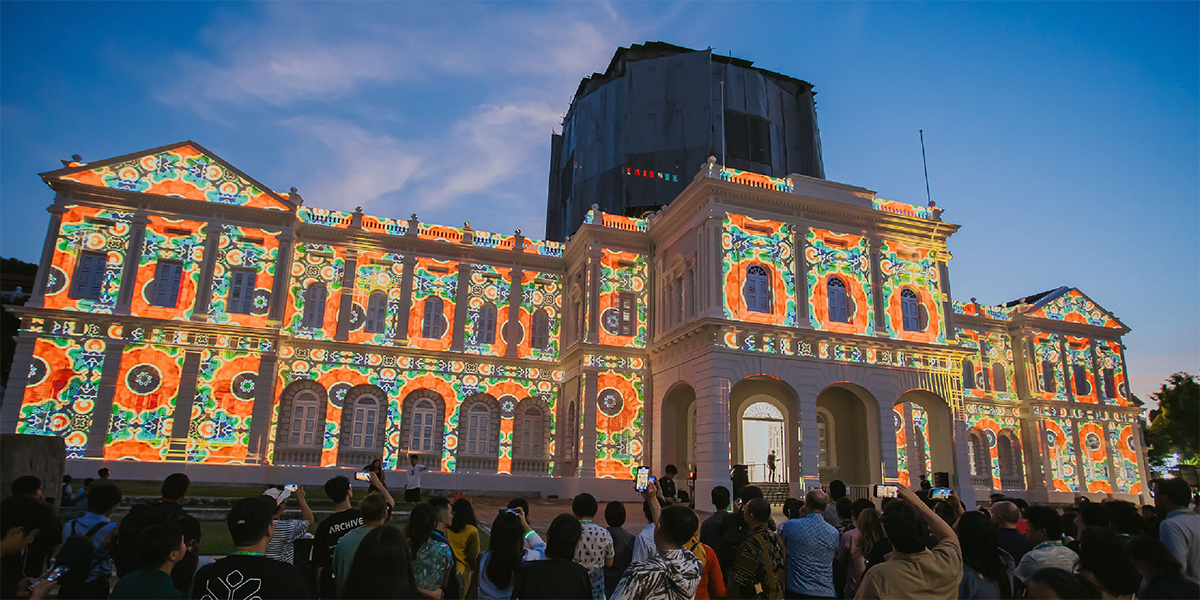
On a humid August evening, the lights in the Bras Basah.Bugis precinct flicker on, washing colonial buildings with light projection and filling the streets with art installations. Crowds begin to gather, phones raised, music spilling into the streets.
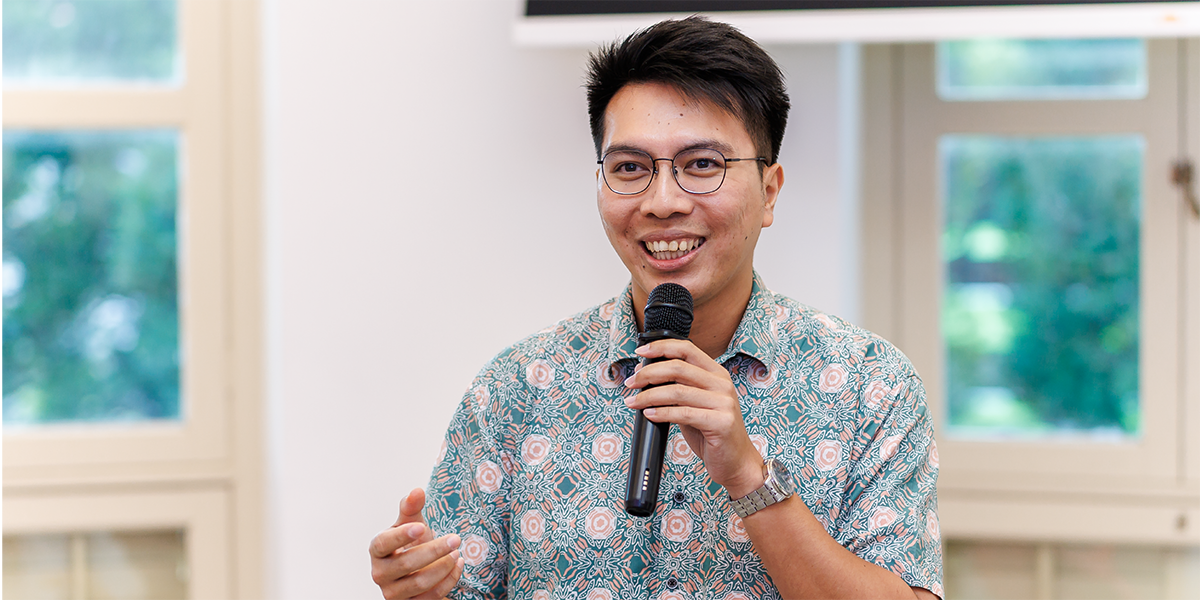
Standing at the edge of the crowd, Qazim Karim takes it all in — not as a spectator, but as someone responsible for shaping the experience unfolding before thousands. As Festival Director of the Singapore Night Festival (SNF) 2025, he is witnessing months of planning come alive in the shared glow of light, sound and movement.
LAYING THE FOUNDATION
Before he was a Festival Director, Qazim was once a student in his junior college drama club. It was there that his interest in the arts first took root, sparking a curiosity about theatre that later led him to an internship with Toy Factory Productions, a bilingual theatre company.
“The experience opened my eyes to the cultural landscape and the ‘behind-the-scenes’ work, deepening my appreciation for the industry and the people behind it,” Qazim says.
That growing interest in arts and heritage, combined with the leadership skills he developed while studying Communications at SIM–University at Buffalo (UB), laid a strong foundation for his future career. His involvement in the SIM–UB Student Council, where he served as Director of Events, proved especially formative.

“Leading a team of almost 20 members gave me hands-on experience in organising large-scale events, managing stakeholders, and seeing projects through concept to execution,” Qazim recalls. “Those skills continue to be relevant in my work today.”
His education at SIM also exposed him to students from other institutions such as University of London and RMIT. He explains, “Collaborating with students from different academic backgrounds helped me appreciate diverse perspectives and reinforced the value of collective problem-solving.”
Beyond leadership experience, SIM’s diverse student community broadened his worldview. “As someone who didn’t have many opportunities to travel overseas at the time, interacting with international students became a meaningful form of intercultural exchange,” Qazim elaborates. “Being in the same classroom challenged me to see issues through different cultural lenses.”
TURNING PASSION TO CAREER
Upon graduating in 2013, Qazim decided to pursue a career in the arts. During his time at the Malay Heritage Centre, he worked on community outreach programmes that brought him closer to Singapore’s diverse communities.
“It was not only a chance to engage different communities,” he says, “But also an opportunity to reconnect with my own cultural roots.”
As Qazim progressed in his career, these experiences reinforced his belief in the power of arts and heritage to celebrate diversity while strengthening a shared sense of belonging. Community engagement, he realised, lay at the heart of meaningful cultural work.
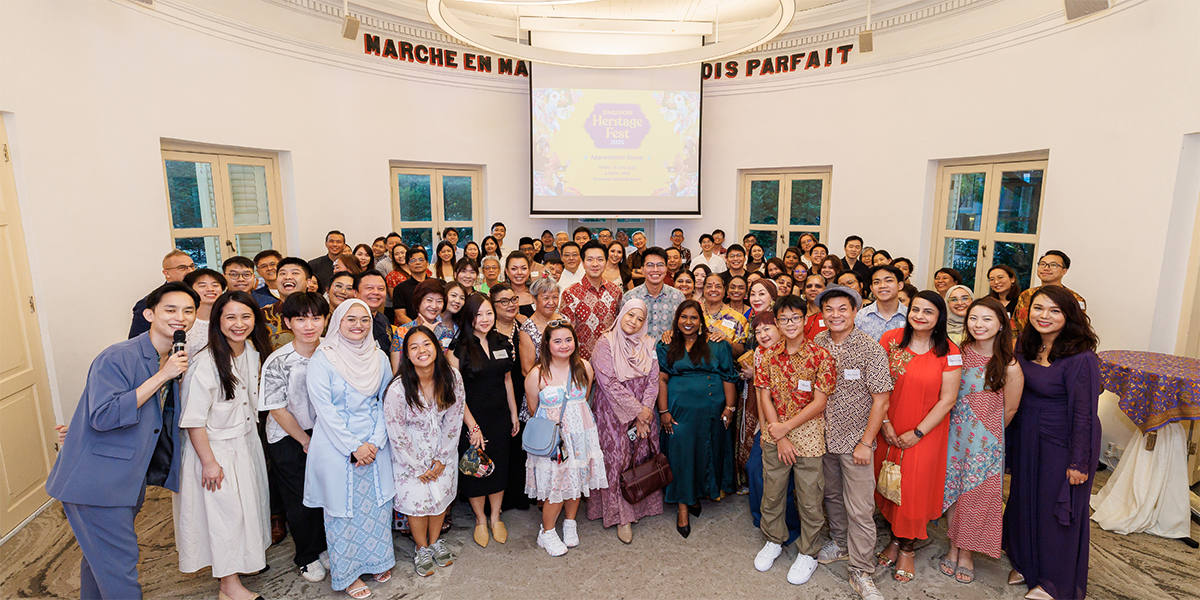
“What we experience today will become the heritage of the future,” Qazim reflects. “Our stories and shared histories help us navigate uncertainty and change, while keeping us grounded.”
For Singapore, he believes arts and heritage play a crucial role in fostering understanding within a diverse society. “They allow us to recognise both our shared experiences and our differences, and to see how each community contributes to Singapore’s evolving story,” he says.
FROM SPECTATOR TO DIRECTOR
Over the years, Qazim rose through the ranks, eventually taking on the role of Festival Director for SNF 2025.
“When I first joined the National Heritage Board, I experienced the festival simply as a visitor,” he reminisced. “Later, I became part of the organising team, working behind the scenes to bring the festival to life.”
Stepping into the role of Festival Director felt like a full-circle moment for Qazim. It gave him the opportunity to shape the festival’s overall direction and take a more holistic approach to the experience created for audiences, artists and partners alike.
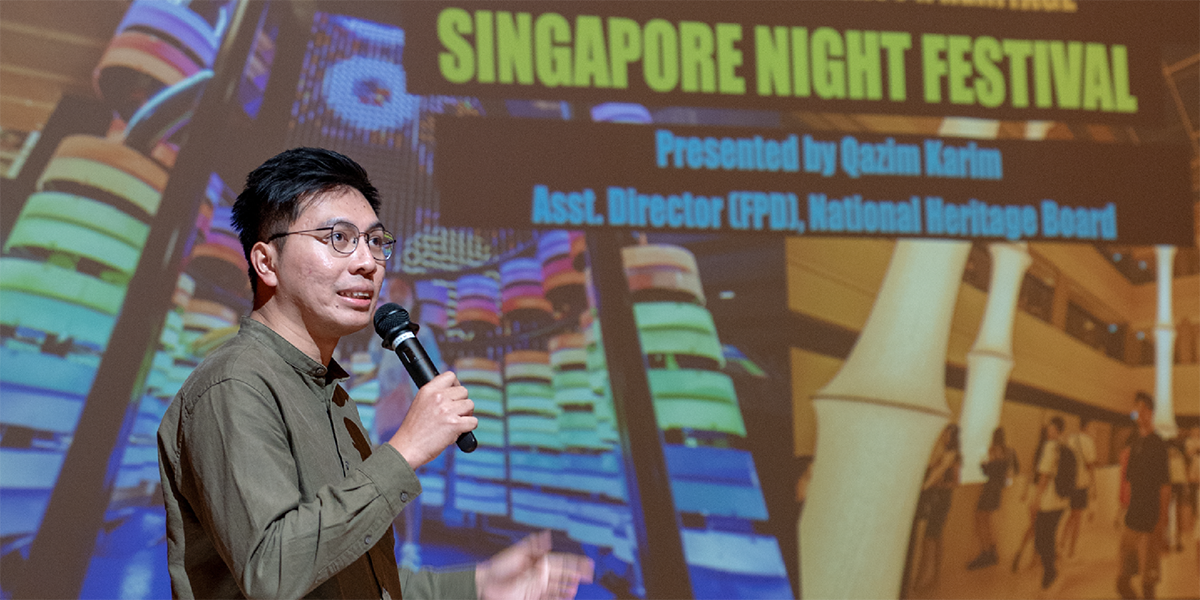
“Beyond delivering a visually engaging event, I wanted to be intentional about how the festival tells stories, engages communities, and continues to evolve while staying true to what makes SNF special,” he explains.
One of the key objectives of SNF 2025 is to position the Singapore Night Festival as the nation’s largest nocturnal experience, driven by close collaboration with partners across Southeast Asia to exchange ideas and best practices.
A major milestone in this effort is the launch of the ALIGHT (A Southeast Asian Light) Network Conference which brings together leading practitioners from around the region to share expertise in areas such as projection mapping and light-based public art, Qazim pointed out.
However, organising a festival of this scale also comes with challenges. Balancing creative ambition with operational realities, managing diverse stakeholders and ensuring accessibility requires constant coordination and communication. Yet, these challenges continue to push the festival to evolve while staying true to its identity.
“What truly moves me is seeing people from all walks of life come together,” Qazim says. “Those moments remind me that the work we do truly matters.”
TO THE NEXT GENERATION
So strong is his conviction in the importance of arts and culture that alongside his day job, Qazim is also a part-time lecturer at LASALLE’s Arts Management faculty where he mentors the next generation of arts managers.
“Preserving arts and heritage is not just about remembering the past—it’s about shaping a more connected and inclusive future,” he affirms.
As arts is not the commonly taken route in Singapore, Qazim hopes to play his part to provide students with the skills and knowledge they need to succeed in the cultural sector.
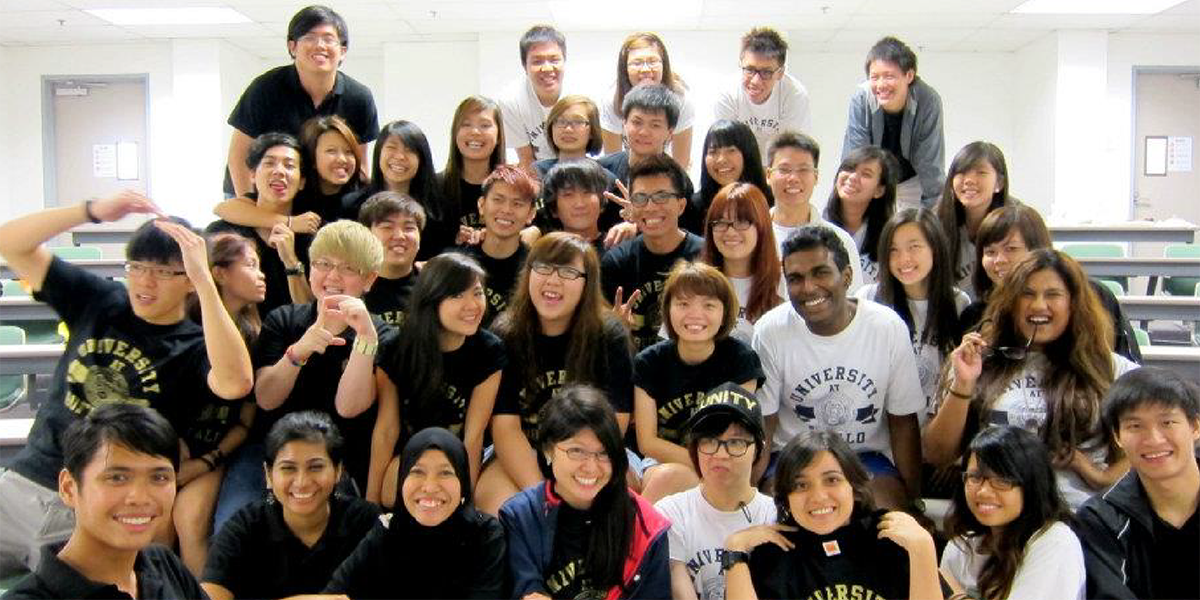
To his SIM juniors, he encourages them to start networking even in university.
“You never know where future collaborations, opportunities, or even your next employer might come from.”
Besides, meeting people from different disciplines and pathways can help build soft skills.
“Trust the journey, keep learning and stay curious,” Qazim concludes. “One day, you’ll look back and feel proud of how far you’ve come.”