

Learning Beyond the Classroom: Aaron's Experience in AI and Public Service

Curious about how artificial intelligence (AI) could be used to solve real-world challenges, Aaron Lee sought opportunities to apply his learning beyond classroom while pursuing his Bachelor of Science (Honours) in Computer Science at SIM–University of London. This led him to an internship with the Ministry of Manpower (MOM) where he gained first-hand experience applying what he learnt in school to policy and future workforce challenges.
Building on what he learnt at MOM, Aaron continued to deepen his interest in applied AI through another internship with the Government Technology Agency of Singapore (GovTech). His commitment to learning was recognised through the SIM Work-Integrated Learning for Life (WILL) Award, a programme under SIM Impact Fund, which recognises students who actively pursue internship opportunities and demonstrate commitment to real-world learning and holistic development.
Be inspired by Aaron’s sharing below.
Q: What inspired you to apply for this internship?
A: I wanted to work on applied AI where it could influence real-world decisions, rather than just coursework or side projects. A research role at MOM offered the opportunity to use AI to tackle genuine policy and foresight challenges on a national scale, which was exactly the combination of impact and technical depth I was looking for.
Q: What do you think helped you stand out and secure this internship opportunity?
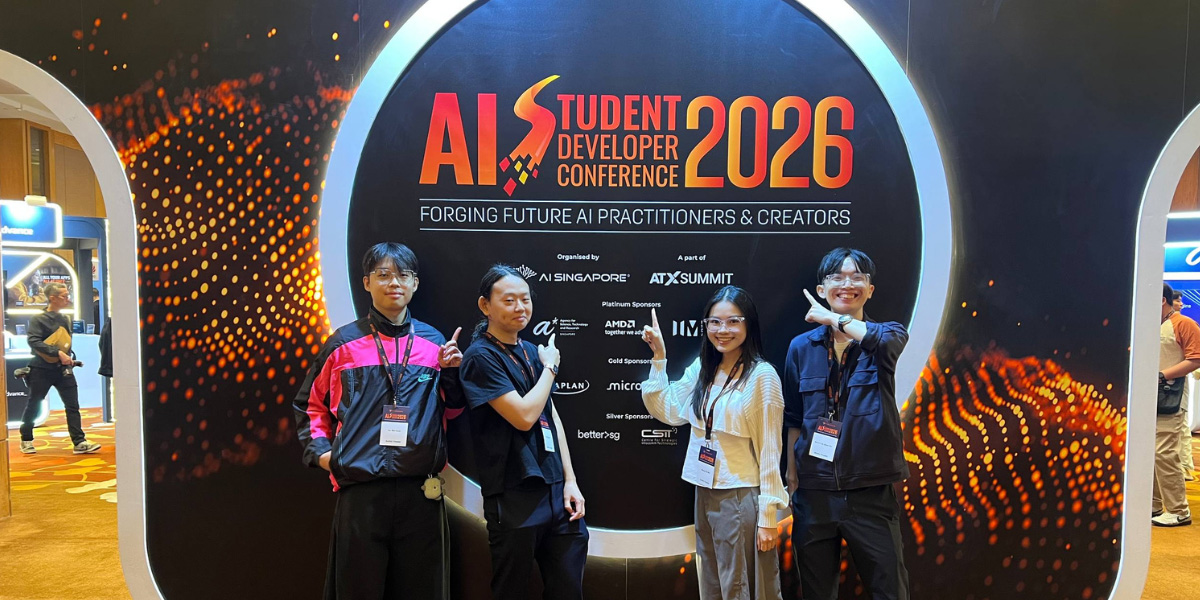
A: I believe my hands-on experience helped me demonstrate how I could apply AI concepts in practical settings. Even before the internship, I had taken part in numerous hackathons, which exposed me to turning rough ideas into working solutions under pressure.
As a result, I was already comfortable taking ownership of a problem from a vague brief through to a finished tool, while also being able to explain technical concepts clearly to non-technical stakeholders.
Q: What were your main responsibilities during your internship?
A: As an intern with MOM, my primary focus was researching suitable AI tools that support strategic foresight and future work. This involved building small prototypes to test ideas and concepts, culminating in the development of an AI tool to help identify and analyse emerging manpower trends.
At GovTech, my focus is on building proofs of concept that explore how AI can support digital transformation in the public service. This involves scoping a broad business need into something buildable, developing a working prototype, and iterating it with the officers who would eventually use it.
Learning and Growth on the Job
Q: What challenges did you face, and how did your SIM coursework prepare you for them?
A: The biggest challenge was dealing with ambiguity. Many projects began with open-ended problems that had no clear template and a large amount of unstructured and unorganised data. Getting reliable and consistent outputs from large language models (LLMs) required continual iteration and developing my own validation processes.
I tackled these challenges by breaking problems down into smaller, manageable tasks, testing solutions as I progressed, and being willing to revisit work that did not produce reliable results.
My Computer Science coursework provided the programming and data fundamentals that I relied on every day, while machine learning (ML)-focused modules helped me understand both the capabilities and limitations of these models. The self-directed projects throughout my degree further developed my ability to teach myself whatever a problem required, which is a large part of what applied AI work involves.
Q: How did your internship help you grow in these areas?
A:
Head (knowledge and thinking skills): It strengthened my ability to approach applied AI problems by breaking down ambiguous challenges, designing data pipelines, and critically evaluating model outputs rather than accepting them at face value.
Heart (values, attitudes, and self-awareness): It increased my confidence in working with ambiguity, strengthened my sense of ownership, and gave me a greater appreciation for work that serves the public.
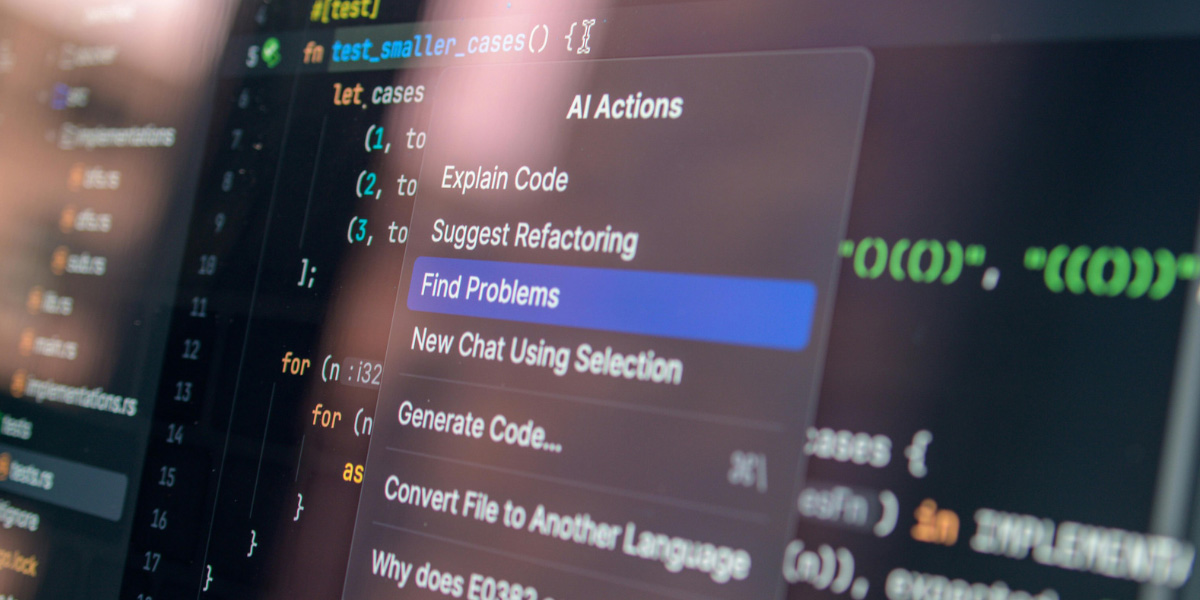
Hands (practical and applied skills): I gained hands-on experience in end-to-end solution development, including Application Programming Interface (API) integration, automation, natural language processing (NLP), clustering, and packaging solutions so others could use and maintain them. I also became more confident presenting technical work to different audiences.
Recognition and Advice
Q: How do you think these experiences will help you succeed in your future career?
A: More than any single technical skill, this internship gave me practical experience of taking ownership of a problem from end to end, delivering solutions that people genuinely use, and learning from my seniors. It was exactly the launchpad I wanted before starting my career, and it led directly to my current internship at GovTech, where I am continuing to work on applied AI projects in the public sector.
More broadly, my internship at MOM reinforced my commitment to applied AI and gave me the foundation to continue building my career in this field. The habits I developed there—teaching myself whatever a problem requires, seeing projects through to completion, and communicating technical work clearly—are valuable skills that I will take with me.
Q: What advice would you give to students who are unsure about taking up an internship?
A: Just do it. It might feel daunting at first. You may not feel fully prepared at first and will take time to learn and figure things out along the way.
The most important thing is to be honest about what you do not know, then challenge yourself to pick up new skills. If you persevere, you will come away with much satisfaction and more confidence than when you started.
About the SIM WILL Award
The SIM Work-Integrated Learning for Life (WILL) Award, a programme under the SIM Impact Fund, recognises students who demonstrate a strong commitment to gaining real-world experience and developing holistically across areas in cognitive (Head), affective (Heart), and psychomotor (Hands) competencies to excel in their future careers. The SIM Impact Fund is a $60M, 10-year transformative initiative that creates opportunity, mobility and employability.