

With no formal business training, the pair enrolled in the Dr Richard K M Eu – SIM Social Entrepreneurship Centre (RESSEC)'s Specialist Diploma in Social Entrepreneurship (SDSE). Through the programme, they refined their approach and went on to secure support from the raiSE EnergiSE grant programme, a grant designed to support social startups.
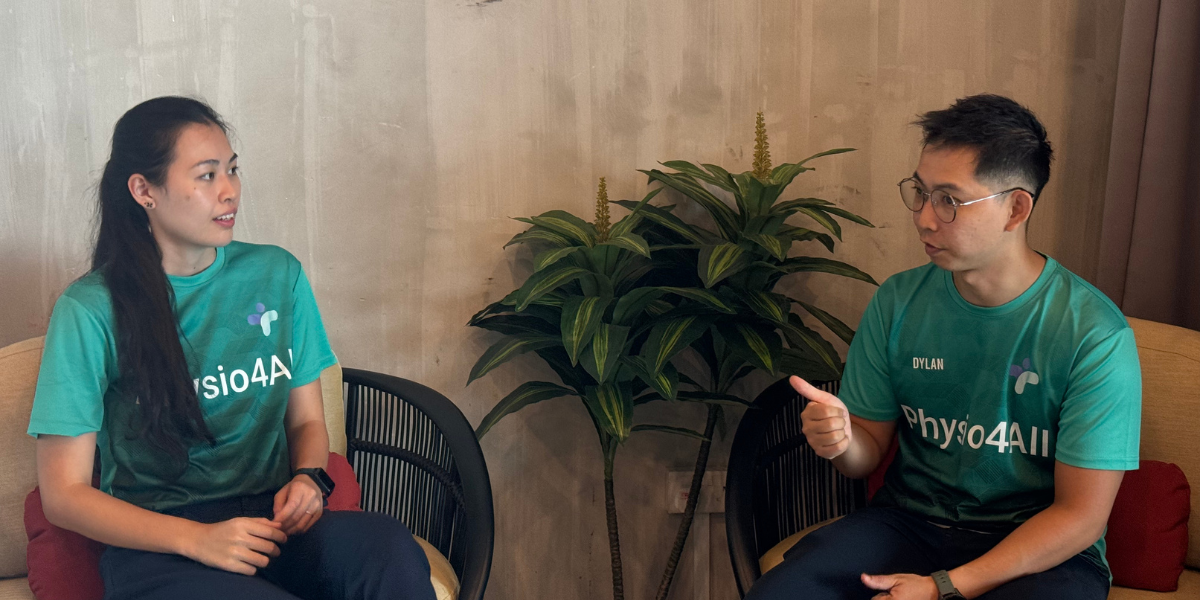
Q: Tell me about your personal backstory. What is your background?
Dylan: I come from a background in physiotherapy and exercise science, with professional experience spanning both clinical settings and the social service sector. One particularly formative period was when I worked in a social service organisation. That role gave me firsthand exposure to the challenges faced by underserved populations — especially those living with disabilities or chronic conditions.
Emily: I began my career as a physiotherapist in the social service sector, working closely with adults and seniors with a wide range of medical conditions and disabilities. Over time, I took on roles in service quality and assurance, as well as centre management, which broadened my perspective on how care systems are designed and delivered.
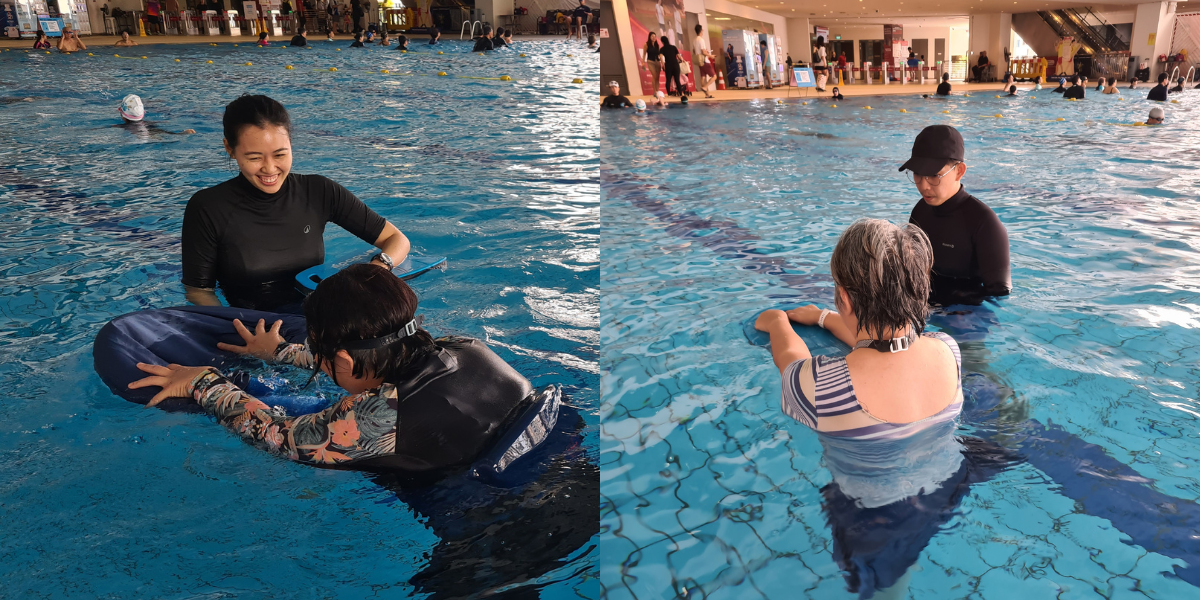
Q: You both worked as physiotherapists in the social service sector. What was that lightbulb moment when you realised that clinical care alone was not enough for the community?
Dylan: I saw a real disconnect between rehabilitation services and long-term community participation. Many individuals had the will to continue improving, but they lacked access and appropriate opportunities. I started asking: What if physiotherapy extended beyond the clinic and into the heart of the community?
Emily: I saw the same fragmentation. Even when recreational programmes exist for persons with disabilities, barriers like cost, accessibility, and a lack of skilled facilitators often limited meaningful participation for certain groups. It resonated deeply with me that people are often disabled not by their condition, but by societal barriers.
Q: That is a powerful realisation. How did that shared vision eventually become Physio4All?
Emily: My work led me to reflect on how to leverage my skills beyond the clinical setting to create safe, supportive spaces. Together with two other co-founders, we developed a vision to make physiotherapy more accessible, bridging the gap between rehabilitation and everyday living.
Dylan: Physio4All is a working concept built on the belief that rehab should be more inclusive and empowering. At its heart, it aims to connect physiotherapy with recreational movement and social participation, supported by a dual-service model where mainstream services help fund access for those in need.
Q: What made you think SDSE was exactly the business toolkit you need to take Physio4All to the next level?
Dylan: In 2024, I came across SDSE through an emailer from raiSE while I was looking for a way to structure an idea I had been sitting with for some time. I wanted the concept to be meaningful but also grounded in real need. I needed a way to navigate uncertainty with structure. SDSE would give me clarity, frameworks, and tools.
Emily: Dylan highly recommended SDSE after he attended the programme as it covers areas where we had no formal training as healthcare professionals. We knew we needed foundational business capabilities to run a social enterprise that did not rely solely on long-term grants. I enrolled in 2025 to develop my capabilities, particularly in building a model that is both financially viable and scalable while delivering social impact.
Q: Which framework(s) learnt from the course changed how you run Physio4All?
Dylan: A memorable highlight for me was mapping our assumptions. That exercise made me realise how much I had been relying on intuition without validation. It shifted me towards seeking insights from real users.
Emily: For me, it was Market Validation and the Lean Business Canvas. They helped us clarify our value proposition and test assumptions early, ensuring our programmes aligned with real needs rather than perceived ones. Market segmentation also allowed us to prioritise the groups we aim to serve more effectively.
Q: Can you share a behind-the-scenes moment where you put these theories to the test?
Emily: We market-tested a potential revenue stream of selling rehabilitation equipment. It helped us understand customer demand and identify target segments. While we decided not to pursue it at this stage, the process provided deeper insights into our customers' behaviours, which informed our broader strategy.
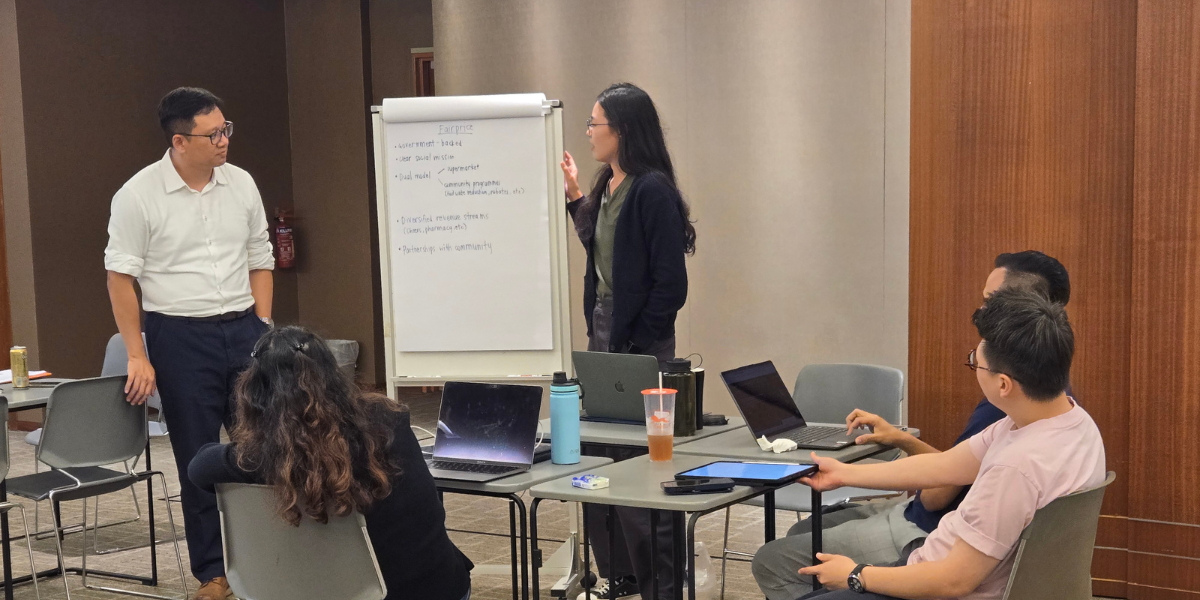
Dylan: For me, the capstone project was the catalyst. It made me step back and assess the concept critically — not just the mission, but also the operations, viability, and user alignment. I realised we needed a better structure for measuring impact without oversimplifying outcomes.
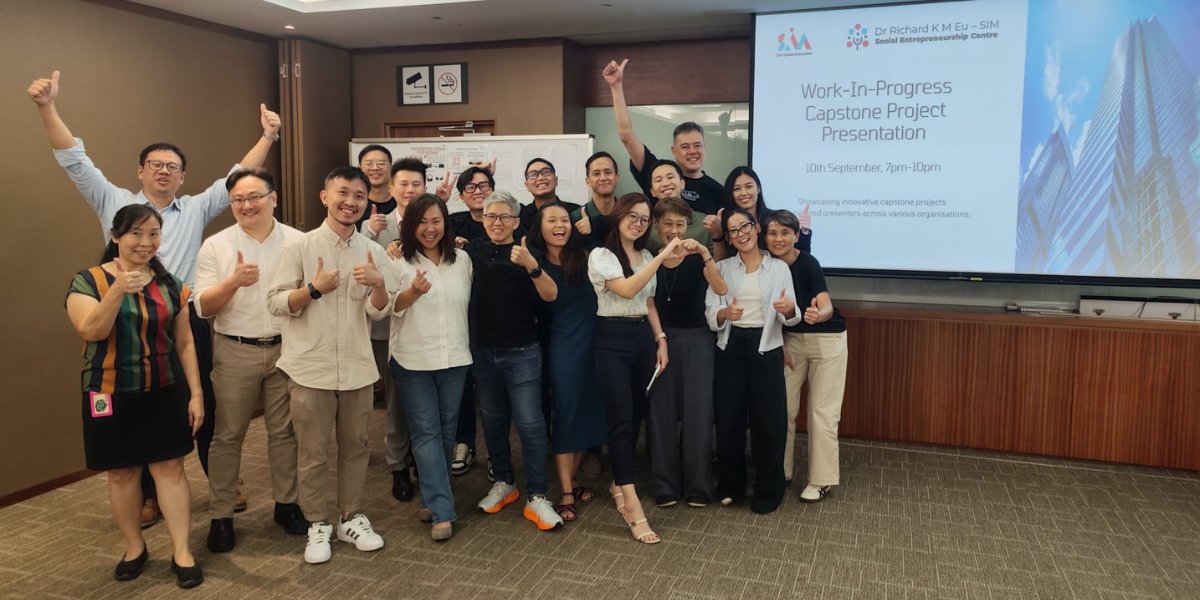
Q: Since graduating from SDSE, how has what you have learnt helped Physio4All grow?
Emily: It has been a gamechanger for funding and strategic partnerships. The initial modules in Social Entrepreneurship Foundations, Design Thinking, and Market Validation were instrumental in how I approached grant application, helping us identify measurable outcomes and demonstrate alignment between our social mission and operational viability. We successfully secured support from the raiSE EnergiSE grant programme as a result.
We have also forged partnerships that allow us to pursue our mission with greater discipline and confidence. We now have more clarity in prioritising opportunities and allocating resources.
Dylan: SDSE gave me a way to navigate uncertainty with structure. It taught me to approach stakeholder engagement, service design, and sustainability planning more systematically. The Marketing module has especially helped me position our evolving idea in a way that builds resonance without overpromising.
Q: What is your advice to professionals who are leading with their hearts but "guessing" on the business side?
Emily: Go beyond having a strong passion. Actively test and validate your ideas early. Be prepared for your assumptions to be challenged and be willing to refine your ideas based on what works in an ever-changing environment.
Dylan: Do not wait for everything to be perfect. Start small and be open to being wrong — that is where the learning happens. If you are considering SDSE, go for it. It is not just frameworks; it is about gaining clarity, courage, and a community that believes in meaningful change.
About RESSEC and SDSE
Supported by the SIM Impact Fund, a $60 million, 10-year initiative to maximise learners' potential and expand educational access and pathways, the Dr Richard K. M. Eu – SIM Social Entrepreneurship Centre (RESSEC) seeks to develop the next generation of social entrepreneurs and changemakers through initiatives such as the Specialist Diploma in Social Entrepreneurship (SDSE). Click to find out more about SDSE.