TEACH
How do we enhance teaching & learning, our philosophy at SIM is to equip our associates with confidence to be future-ready and handle challenges for tomorrow.
How do we enhance teaching & learning, our philosophy at SIM is to equip our associates with confidence to be future-ready and handle challenges for tomorrow.

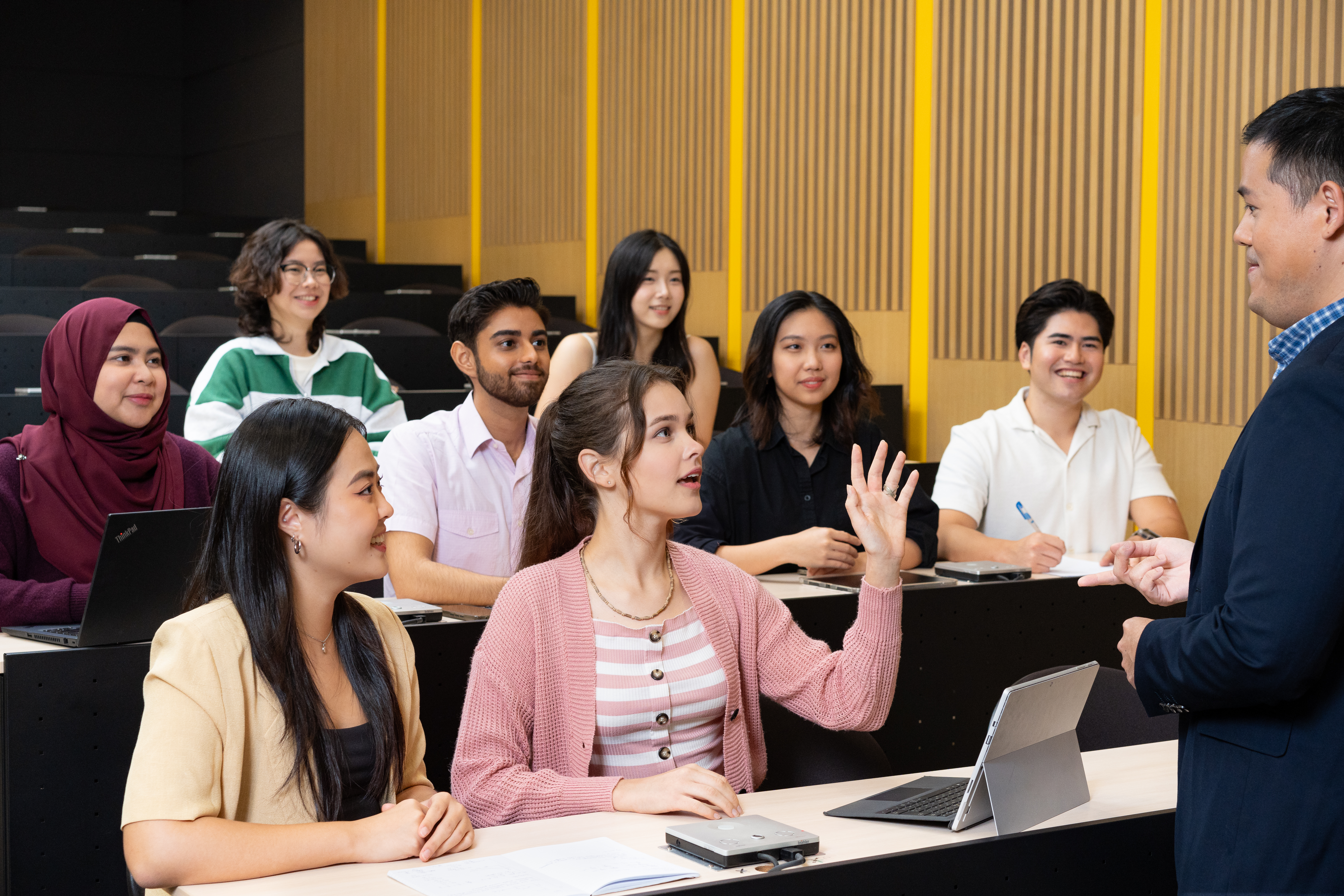
As part of its ongoing efforts to enhance the learning experience across all programmes, SIM Academic Division (ACAD) has introduced the Explore–Experiment–Guide–Apply–Reflect (EE-GAR) teaching and learning framework.
Show moreDesigned as SIM’s signature pedagogy, EE-GAR aims to reshape classroom practice by placing students at the centre of the learning process and encouraging deeper engagement with course content.
Why EE-GAR?

Fig.1 SIM's EE-GAR framework
The framework was developed in response to evolving student needs and the growing demand for learning experiences that are engaging, authentic, and relevant to real-world contexts. At its core, EE-GAR shifts learning away from passive knowledge acquisition towards active participation and meaningful application.
Specifically, the framework seeks to:
Empower students to take ownership of their learning, fostering responsibility, agency, and motivation.
Reframe the lecturer’s role from content deliverer to facilitator and guide.
Encourage the application of knowledge in real-world contexts, bridging theory and practice.
Promote peer learning, allowing students to learn from different perspectives and experiences.
From Framework to Classroom Practice
Following its development, EE-GAR was gradually implemented across SIM programmes. Initial pilots in selected courses demonstrated encouraging outcomes, particularly in student engagement and the overall quality of classroom learning. Building on these positive results, the framework was subsequently rolled out more broadly, beginning with the MFS, DMS, and ITFS programmes.
Reflecting on the changes observed since implementing the framework, Head of Programme Mr Gary Chan noted that the shift towards a more student-centred approach has influenced how students participate in the learning process.
“As we adopted the EE-GAR approach, I observed a noticeable shift in how students engage with their learning. More students demonstrated stronger personal responsibility and ownership of their learning. As EE-GAR encourages them to explore ideas independently and make sense of concepts through exploration and experimentation, students tend to exercise deeper critical thinking and participate more actively with the educator’s guidance in class,” said Mr Chan.
He added that while these changes may not always translate immediately into higher grades —especially for students adjusting to more self-directed learning frameworks — the quality of student participation and problem-solving attempts has generally improved.
Supporting Lecturers Through Transition
Introducing a new teaching approach also required lecturers to pivot from long-established classroom practices. Reflecting on this transition, Mr Chan explained that educators initially had to adjust to a different classroom dynamic.
“Moving away from traditional lecture-based instruction meant managing more open-ended student questions and diverse learning pathways. Instead of responding immediately with solutions, instructors had to step back, pose guiding questions, and create space for students to explore, experiment, and co-create understanding,” Mr Chan shared.
To support lecturers through this shift, ACAD implemented a structured and multi-modal approach that included:
Asynchronous online courses to familiarise new lecturers with the EE-GAR framework
Workshops focused on practical lesson design and classroom strategies
Peer-sharing sessions and collaborative reflection among educators
Classroom observations and small-group consultations for ongoing feedback and support
A Changing Classroom Dynamic
From the classroom perspective, the framework has also influenced how lessons are designed and conducted. Mr Law Yew Seng, a full-time member of the academic staff, shared that EE-GAR provides a clear structure that helps lecturers organise learning activities more intentionally.
“The EE-GAR framework provides me with a concrete structure to organise my classes. When students begin by exploring ideas related to the lesson content, they develop a foundation that allows lecturers to connect new concepts more effectively. During lessons, we can address knowledge gaps and guide students to apply what they have learnt through discussions and activities before encouraging them to reflect on their understanding,” said Mr Law.
He also observed a noticeable shift in how students participate in class. “Students have shown greater willingness to engage in activities. They recognise that teaching and learning are shared responsibilities between lecturers and students, rather than the lecturer simply acting as the ‘sage on the stage’,” Mr Law added.

Fig.2 Lecturers learning how to implement the EE-GAR framework into their lessons
Moving Forward Together
Through the EE-GAR framework, SIM continues to strengthen a learning environment where curiosity, participation, and reflection are central to the educational experience. By encouraging active engagement and meaningful application of knowledge, the framework supports the development of learners who are better prepared to navigate and contribute to an increasingly complex and dynamic world.


As part of SIM Academic Division (ACAD)’s commitment to strengthening instructional quality, the Centre for Teaching & Learning (CTL) continues to lead professional development initiatives that help lecturers grow and adapt to the needs of today’s classrooms. This year, CTL conducted a new training series aimed at helping lecturers better understand and respond to students with special needs and diverse learning profiles.
Show more
The first webinar, “A Glimpse into the Special Needs Community,” brought together 27 participants for a 1.5-hour session that offered both insight and practical strategies. Delivered by Ms Kaminee Ramakrishnan, an experienced specialist in supporting teenage students with Autism Spectrum Disorder (ASD), Mild Intellectual Disability (MID), Global Developmental Delay (GDD), Down Syndrome, and other related conditions, the session provided a meaningful look into the special needs community and approaches that can be applied in the classroom.


Reflecting on the webinar, Ms Suzanne Lau shared, “The session helped our lecturers see students’ needs from a new perspective. It was heartening to see so many of our instructors aspire to create more inclusive learning environments”.
Post-session feedback highlighted the event’s strong relevance to everyday teaching. Ms Gina Ng noted, “Many lecturers shared that they have encountered students with ASD, ADHD, anxiety, depression, and other mental health challenges. This reminds us that diverse and often invisible learning needs are already present in our classrooms”. Participants also expressed interest in further capability-building courses on topics such as coping strategies for students, practical management strategies, and a deeper understanding of ASD.
This collaboration between CTL and Student Development underscores ACAD’s commitment to fostering inclusive teaching practices. As Ms Ng emphasised, “Our goal is to move towards a consistent, supportive learning environment across the institution — one where inclusive design benefits all students, not just those with identified needs”.
Through open dialogue, shared learning, and thoughtful guidance, the webinar reinforced a culture of inclusivity — one where all students have the opportunity to thrive.
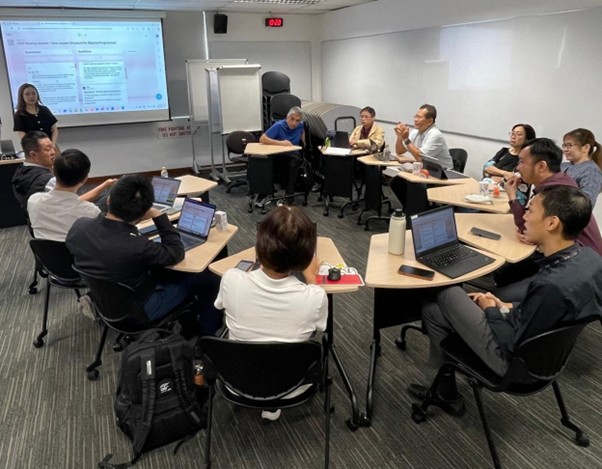
As part of the ongoing implementation of SIM Academic Division (ACAD)’s EE-GAR signature pedagogy, a Community of Practice (CoP) session was held on 23 July 2025, bringing together Associate Lecturers and full-time academic staff to share experiences in applying the 1+2 lesson structure.
Show more
Reflecting on the session, Ms Gina Ng, the organiser, shared, “The main objective of the CoP was to strengthen our teaching community by creating a supportive space for lecturers to reflect on and refine the 1+2 lesson structure. Colleagues valued candid discussions on real classroom experiences and practical strategies to encourage participation and assess engagement”.
Ms Ng also emphasised the broader impact of peer-sharing: “Sessions like this are vital because they allow lecturers to learn from one another’s lived experiences. Rather than working in isolation, educators gain insight into what works, what doesn’t, and why. These exchanges foster
trust, collegiality, and a culture where teaching is viewed as a shared professional endeavour, ultimately enhancing the learning experience for students across programmes”.
Participants reflected on how the 1+2 lesson structure has shaped their tutorials. Ms Suzanne Lau noted, “With the new lesson structure, I had to think carefully about tutorials to reinforce lecture content. The challenge was ensuring that less outspoken students could be recognised. Strategies like in-class written quizzes and end-of-term self-evaluation surveys allowed shy students to demonstrate participation. It’s amazing to see how even quiet students want to engage actively when given the right opportunities”.
The session highlighted improvements in tutorial attendance, the importance of transparent participation tracking, and practical ways to balance engagement with workload.
By fostering open dialogue, shared reflection, and peer learning, the CoP session reinforced the value of collaboration in embedding EE-GAR into everyday teaching, helping lecturers translate framework principles into practice and creating a more engaging, inclusive learning environment for students.
SIM celebrates with our associates and lecturers at the annual faculty dinner, giving out teaching awards and receiving validations from fellow peers. Show more


